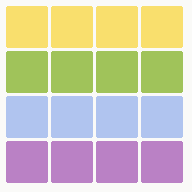
NYT Connections Hints, Answers & Clues -
NYT Connections #1198 Tip
Every word here moonlights as something completely unrelated to its obvious job.
What Makes NYT Connections #1198 Tricky?
Words like COMPOSE, CHECK, CASTLE, and CHUM land in completely different mental registers — software interface, a bank, a board game, a buddy — and BEET, BRAH, VIVA, and CHOP sit alongside them without any obvious shared territory.
The editor's trick is that almost every word has a strong, familiar meaning that is completely wrong for this puzzle — the obvious reading is the decoy, and the correct reading requires knowing a secondary or domain-specific sense.
This one is genuinely hard — one group may click quickly if you fish or play chess, but the fourth group requires recognising fragments of proper names, which is the kind of lateral thinking that trips up even experienced solvers.
Connections Hints for Every Word in the September 21, 2026 Puzzle
COMPOSE
Connections hint for COMPOSE
The button you press to start a new email — not the musical sense of writing a symphony.
CHECK
Connections hint for CHECK
A chess move that puts the opponent's king under direct attack — not verifying, not a bank cheque.
FLY
Connections hint for FLY
An artificial fly used as fishing bait — not the verb meaning to travel by air.
BEET
Connections hint for BEET
The first four letters of BEETHOVEN — the vegetable is the decoy.
BRAH
Connections hint for BRAH
The first four letters of BRAHMS — sounds like casual slang for brother, but that is the trap.
WORM
Connections hint for WORM
A live worm threaded onto a hook to attract fish — not a computer virus or the verb meaning to wriggle.
SPAM
Connections hint for SPAM
The email folder that catches junk and unwanted messages — not the canned meat.
MATE
Connections hint for MATE
Checkmate — the chess move that ends the game by trapping the king with no escape.
CASTLE
Connections hint for CASTLE
To castle in chess means to move the king two squares toward a rook and swap their positions — a specific defensive manoeuvre, not a building.
CHUM
Connections hint for CHUM
Chopped fish or blood scattered in water to attract fish — not a word for a close friend here.
VIVA
Connections hint for VIVA
The first four letters of VIVALDI — sounds like a cheer or a car brand, but it is a composer fragment.
SENT
Connections hint for SENT
The email folder that stores messages you have already sent — straightforward once you see the category.
CHOP
Connections hint for CHOP
The first four letters of CHOPIN — not the cooking action or a karate move.
CAPTURE
Connections hint for CAPTURE
To take an opponent's piece off the board in chess — not catching a criminal or photographing a moment.
DRAFTS
Connections hint for DRAFTS
The email folder where unfinished messages are saved before sending — not multiple versions of a document.
SPINNER
Connections hint for SPINNER
A spinning lure that rotates through water to mimic a small fish and attract predators — not a DJ or a fidget toy.
Traps & Misdirects Hints for NYT Connections Puzzle (#1198)
COMPOSE means to write music, CHOP is what a chef does, and CHECK is what you do before sending an email — all three feel like general action verbs that could anchor a category together. That surface similarity is a dead end. Each of these three belongs to a completely different group, and none of them is being used in its most obvious sense here.
CHUM means pal, MATE is British slang for friend, and BRAH is a casual term for buddy — clustering them as words for a close friend feels almost too easy. That reading is wrong for all three. Each of these words is doing something entirely different in this puzzle, and the friendship angle is the bait.
CASTLE is a building, CAPTURE means to catch something, and CHECK means to verify — none of those meanings are in play here, but they pull in different directions and make it hard to see what these words actually share. If you play chess, this group may click; if you do not, these three words will scatter across several wrong guesses.
SPINNER sounds like a DJ technique, FLY is what you do on a plane, and WORM is a computer virus — all three have strong non-fishing meanings that feel plausible in a puzzle context. None of those readings apply here. These three are united by something much more specific and hands-on.
Connections Hints for September 21, 2026
Yellow Connections Hints
Yellow Category Hint
Labels on folders in your inbox sidebar
Think: Think: inbox navigation, unsent messages
Yellow Category Name
EMAIL BUTTONS
Yellow Category Words
Reveal word 1
COMPOSEReveal word 2
DRAFTSReveal word 3
SENTReveal word 4
SPAMGreen Connections Hints
Green Category Hint
Things you use to lure fish toward your hook
Think: Think: tackle box, bait types
Green Category Name
WAYS TO ATTRACT FISH
Green Category Words
Reveal word 1
CHUMReveal word 2
FLYReveal word 3
SPINNERReveal word 4
WORMBlue Connections Hints
Blue Category Hint
Actions a player performs during a chess game
Think: Think: board moves, king in danger
Blue Category Name
CHESS VERBS
Blue Category Words
Reveal word 1
CAPTUREReveal word 2
CASTLEReveal word 3
CHECKReveal word 4
MATEPurple Connections Hints
Purple Category Hint
Opening syllables of famous classical composers' surnames
Think: Think: truncated last names, concert hall
Purple Category Name
STARTS OF COMPOSERS' NAMES
Purple Category Words
Reveal word 1
BEETReveal word 2
BRAHReveal word 3
CHOPReveal word 4
VIVANYT Connections Answers for September 21, 2026
NYT Connections Answers Explained: September 21, 2026
EMAIL BUTTONS
COMPOSE, DRAFTS, SENT, and SPAM are all labels you see in the sidebar of an email client — each one names a folder or action button that organises your inbox.
- COMPOSE
- The button you click to start writing a new email from scratch — the puzzle leans on the musical meaning as a decoy.
- DRAFTS
- The folder where emails you have started but not yet sent are automatically saved — unfinished messages live here.
- SENT
- The folder that stores a copy of every email you have successfully sent — a simple past tense word doing a very specific job.
- SPAM
- The folder that catches unwanted junk mail filtered out of your main inbox — named after the canned meat that became slang for bulk unsolicited messages.
WAYS TO ATTRACT FISH
CHUM, FLY, SPINNER, and WORM are all things anglers use to attract or catch fish — each is a specific type of bait or lure with its own technique.
- CHUM
- Chopped fish scraps, blood, or offal scattered into the water to draw fish toward the fishing spot — the word for a friend is the trap.
- FLY
- An artificial fly tied from feathers and thread to mimic an insect on the water's surface — fly fishing is a whole discipline built around this lure.
- SPINNER
- A metal lure with a blade that spins as it moves through water, catching light and mimicking a small fish to attract predators.
- WORM
- A live earthworm or artificial worm threaded onto a hook — one of the oldest and most effective fishing baits.
CHESS VERBS
CAPTURE, CASTLE, CHECK, and MATE are all verbs describing specific actions or states in a chess game — each one has a precise technical meaning on the board.
- CAPTURE
- To take an opponent's piece by moving your own piece onto its square and removing it from the board.
- CASTLE
- A special move where the king slides two squares toward a rook and the rook jumps to the other side of the king — used for defensive positioning.
- CHECK
- To put the opponent's king under direct attack so that they must respond immediately — the king is in check and cannot be left in danger.
- MATE
- Short for checkmate — the move that ends the game by placing the king in check with no legal escape, meaning the attacking player wins.
STARTS OF COMPOSERS' NAMES
BEET, BRAH, CHOP, and VIVA are the opening four letters of the surnames of four famous classical composers — BEETHOVEN, BRAHMS, CHOPIN, and VIVALDI.
- BEET
- The first four letters of BEETHOVEN — Ludwig van Beethoven, the German composer famous for his symphonies and piano sonatas, including the Fifth Symphony.
- BRAH
- The first four letters of BRAHMS — Johannes Brahms, the German Romantic composer known for his four symphonies and his lullaby.
- CHOP
- The first four letters of CHOPIN — Frédéric Chopin, the Polish composer celebrated for his piano nocturnes, études, and waltzes.
- VIVA
- The first four letters of VIVALDI — Antonio Vivaldi, the Italian Baroque composer best known for The Four Seasons.