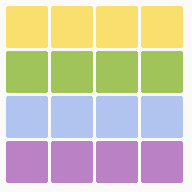
NYT Connections Hints, Answers & Clues -
NYT Connections #1256 Tip
NICE, FRENCH, and DIJON are not what they seem here.
What Makes NYT Connections #1256 Tricky?
Words like NICE, FRENCH, HONEY, and DEEP scatter across this grid — some feel like adjectives, some like foods, some like places — and the collision between those readings is exactly what makes the first pass so disorienting.
The editor's core trick is that several words with strong, obvious English meanings are actually here for a completely different reason, and the most confident-looking clusters are the ones most likely to burn a mistake.
This one skews harder than a Wednesday usually does — one group is genuinely easy once you spot it, but the other three all share words that want to belong to each other, and untangling them takes real patience.
Connections Hints for Every Word in the November 18, 2026 Puzzle
NICE
Connections hint for NICE
A city on the French Riviera — not the adjective meaning pleasant, which is the obvious trap here.
HONEY
Connections hint for HONEY
Bees produce it from nectar — the sweet sticky substance, not the term of endearment.
DEEP
Connections hint for DEEP
As in deep-fry — submerging food completely in hot oil, not an adjective describing depth or a voice.
YELLOW
Connections hint for YELLOW
The colour of a lemon's skin — one of the most immediately recognisable things about the fruit.
SMALL
Connections hint for SMALL
As in small fry — an idiom meaning someone or something of little importance, not just a size descriptor.
JUICY
Connections hint for JUICY
A lemon descriptor — full of juice, which lemons famously are when you squeeze them.
DIJON
Connections hint for DIJON
A city in the Burgundy region of France — famous for mustard, but here it is the city, not the condiment.
COMB
Connections hint for COMB
The honeycomb structure bees build from wax to store honey and raise larvae — a direct bee product.
FRENCH
Connections hint for FRENCH
As in French fry — the classic fried potato strip, not the language or the nationality.
TOURS
Connections hint for TOURS
A city in the Loire Valley of France — not the plural of tour, which is the misleading English reading.
BUZZ
Connections hint for BUZZ
The vibrating sound bees produce with their wings — a genuine bee output, not a social media buzz.
VOCAL
Connections hint for VOCAL
As in vocal fry — the low creaky register at the bottom of someone's speaking voice, not an adjective meaning outspoken.
SOUR
Connections hint for SOUR
A lemon's defining taste — the sharp acidic flavour that makes your mouth pucker.
VENOM
Connections hint for VENOM
Bees inject it through their stingers — a genuine biological product of the bee, not metaphorical poison.
OVOID
Connections hint for OVOID
Egg-shaped — lemons are not perfectly round or perfectly oval but ovoid describes their elongated shape accurately.
CANNES
Connections hint for CANNES
A city on the French Riviera, famous for its film festival — a French city, not a verb or anything else.
Traps & Misdirects Hints for NYT Connections Puzzle (#1256)
NICE means pleasant, HONEY is a term of endearment, YELLOW is a colour, JUICY means full of flavour — grouping these as positive or descriptive adjectives feels completely natural. That reading is a dead end. These words belong to at least three different categories and share nothing in this puzzle.
FRENCH mustard, DIJON mustard, HONEY mustard — three famous mustard varieties sitting in the same grid is almost certainly a trap the editor planted deliberately. The mustard connection is real in everyday life but completely irrelevant here. Each of these words is doing something entirely different in this puzzle.
DEEP, VOCAL, and BUZZ all describe qualities of a voice or sound — a deep voice, a vocal performance, a buzzing noise — and grouping them as sound-related words feels intuitive. That audio association is not what this puzzle is using. At least one of these words belongs somewhere you would not expect.
COMB, HONEY, and BUZZ are three things you immediately associate with bees — a honeycomb, honey itself, the buzz of wings. The bee connection is genuine for some of these words but not all three belong to the same group. Check carefully before locking this in.
Connections Hints for November 18, 2026
Yellow Connections Hints
Yellow Category Hint
Four words that physically or sensory describe the same citrus fruit
Think: Think: what you see, taste, feel
Yellow Category Name
DESCRIPTORS FOR A LEMON
Yellow Category Words
Reveal word 1
JUICYReveal word 2
OVOIDReveal word 3
SOURReveal word 4
YELLOWGreen Connections Hints
Green Category Hint
Four things a bee actually makes or generates
Think: Think: hive outputs, sting, sound
Green Category Name
THINGS BEES PRODUCE
Green Category Words
Reveal word 1
BUZZReveal word 2
COMBReveal word 3
HONEYReveal word 4
VENOMBlue Connections Hints
Blue Category Hint
Four words that are French cities hiding as ordinary English
Think: Think: map of France, Riviera
Blue Category Name
CITIES IN FRANCE
Blue Category Words
Reveal word 1
CANNESReveal word 2
DIJONReveal word 3
NICEReveal word 4
TOURSPurple Connections Hints
Purple Category Hint
Four words that each precede the same cooking-related word
Think: Think: one word completes all four
Purple Category Name
___ FRY
Purple Category Words
Reveal word 1
DEEPReveal word 2
FRENCHReveal word 3
SMALLReveal word 4
VOCALNYT Connections Answers for November 18, 2026
NYT Connections Answers Explained: November 18, 2026
DESCRIPTORS FOR A LEMON
JUICY, OVOID, SOUR, and YELLOW are all words that describe a lemon — its colour, its shape, its taste, and its moisture content — each capturing a different physical or sensory property of the fruit.
- JUICY
- Lemons are famously full of juice — squeezing one yields a significant amount of liquid, making juicy an accurate and common descriptor.
- OVOID
- Lemons are not perfectly round — they are elongated and egg-shaped, which is exactly what ovoid means in geometric terms.
- SOUR
- The defining taste of a lemon is its sharp acidity — sour is the primary flavour note that makes lemons immediately recognisable.
- YELLOW
- The bright yellow skin of a ripe lemon is its most visually iconic feature — yellow and lemon are so linked that lemon yellow is itself a named colour.
THINGS BEES PRODUCE
BUZZ, COMB, HONEY, and VENOM are all things that bees actually produce or generate — a sound, a wax structure, a food, and a biological weapon.
- BUZZ
- Bees produce a buzzing sound by rapidly vibrating their wings — it is a direct physical output of the bee in flight.
- COMB
- Bees build honeycomb from wax secreted by their bodies — the comb is the hexagonal structure used to store honey and house larvae.
- HONEY
- Bees produce honey by collecting nectar from flowers and processing it in the hive — it is the most famous bee product.
- VENOM
- Bees produce venom in a gland connected to their stinger — when a bee stings, it injects this venom, which causes pain and can trigger allergic reactions.
CITIES IN FRANCE
CANNES, DIJON, NICE, and TOURS are all real cities in France — each one disguised by a strong alternative English meaning that makes it easy to overlook the geography.
- CANNES
- Cannes is a city on the French Riviera, internationally famous for hosting the annual Cannes Film Festival — the English word cans is the surface distraction.
- DIJON
- Dijon is a city in the Burgundy region of eastern France — it lends its name to Dijon mustard, which is the very trap the editor is setting.
- NICE
- Nice is a major city on the French Riviera — its spelling is identical to the common English adjective meaning pleasant, which is the most dangerous disguise in the grid.
- TOURS
- Tours is a city in the Loire Valley of central France — its spelling matches the English plural of tour, making it easy to read right past the geography.
___ FRY
DEEP, FRENCH, SMALL, and VOCAL all precede the word FRY to make a familiar compound word or phrase — deep fry, French fry, small fry, and vocal fry.
- DEEP
- Deep fry means to cook food by submerging it completely in hot oil — deep-fried chicken, doughnuts, and chips are classic examples.
- FRENCH
- French fry is the standard name for a fried potato strip — the term is used widely in North America, and the French connection is the trap that makes this word look like it belongs with DIJON and NICE.
- SMALL
- Small fry is an idiom meaning a person or thing of little importance or influence — it comes from the image of tiny juvenile fish.
- VOCAL
- Vocal fry is a speech phenomenon — the low, creaky register produced at the very bottom of a person's vocal range, often described as a crackling or frying sound.