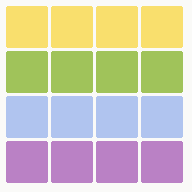
NYT Connections Hints, Answers & Clues -
NYT Connections #1102 Tip
One category hides inside the first syllable of each word.
What Makes NYT Connections #1102 Tricky?
MOUTH, CHEEK, and LIP look like anatomy, ECHO and IRIS look like names, CLASSIC looks like an adjective, and CAVITY looks like a dentist's nightmare — this grid collides body parts, mythology, and vocabulary in a way that makes almost nothing feel certain.
The editor's deepest trick is a category where each word secretly contains a hidden synonym at its start — you have to stop reading the whole word and listen to just the first syllable.
This one skews hard — one group is satisfying and quick, one requires knowing your Greek mythology, and the remaining two demand a kind of lateral thinking that most players will not find without a nudge.
Connections Hints for Every Word in the June 17, 2026 Puzzle
MOUTH
Connections hint for MOUTH
Giving someone mouth means giving them backchat — the body part doubles as slang for impudence.
CAVITY
Connections hint for CAVITY
An empty hollow space — here used in the architectural sense of a recess or alcove, not a tooth decay.
CLASSIC
Connections hint for CLASSIC
Starts with CLASS — a synonym for ilk or type — making it a member of the hidden-synonym group despite looking like a plain adjective.
CALLIOPE
Connections hint for CALLIOPE
The Greek Muse of epic poetry — one of the nine Muses, and the most senior among them.
IRIS
Connections hint for IRIS
The Greek goddess of the rainbow and divine messenger — also a flower and part of the eye, both of which are traps here.
KINDLE
Connections hint for KINDLE
Starts with KIN — a synonym for ilk or type meaning one's own people — making it part of the hidden-synonym group, not a reference to the e-reader.
CHEEK
Connections hint for CHEEK
Saying someone has cheek means they are being bold or impudent — the body part used as an attitude word.
ECHO
Connections hint for ECHO
The nymph in Greek myth who was cursed to only repeat others' words — her name became the word for a sound reflection, but here she is the mythological figure.
NOOK
Connections hint for NOOK
A small sheltered corner or recess — a cosy alcove, as in a breakfast nook.
LIP
Connections hint for LIP
Giving someone lip means talking back rudely — the body part used as slang for cheekiness.
NEMESIS
Connections hint for NEMESIS
The Greek goddess of retribution and divine vengeance — now used loosely to mean a rival, but here she is the mythological figure.
TYPEFACE
Connections hint for TYPEFACE
Starts with TYPE — a direct synonym for ilk or kind — making it part of the hidden-synonym group, not a reference to fonts.
SORTIE
Connections hint for SORTIE
Starts with SORT — a synonym for ilk or type — making it part of the hidden-synonym group, not a military mission.
RECESS
Connections hint for RECESS
A small hollow set back into a wall — the architectural alcove sense, not a school break or a parliamentary pause.
NERVE
Connections hint for NERVE
Saying someone has nerve means they have audacity or cheek — the body part used as an attitude word.
NICHE
Connections hint for NICHE
A shallow recess in a wall, often used to display a statue — the architectural sense, not the marketing buzzword.
Traps & Misdirects Hints for NYT Connections Puzzle (#1102)
IRIS is a flower, ECHO is a sound phenomenon, and CALLIOPE is a steam-powered fairground organ — all three feel like they belong to the natural or musical world rather than mythology. That surface reading is a dead end. All three are also genuine figures from Greek myth, and the puzzle is using them in that sense.
MOUTH, LIP, CHEEK, and NERVE are all literal body parts — the temptation is to group them as anatomy. That reading is wrong. The puzzle uses them as slang words for attitude or impudence, the way you might say someone has a lot of nerve or a lot of lip.
CAVITY sounds dental, NICHE sounds like a marketing term, and RECESS sounds like a school break — each word carries a dominant modern meaning that fights against what the puzzle actually wants. All three are being used in their older architectural sense of a hollow or alcove.
CLASSIC looks like a style descriptor, KINDLE looks like the Amazon e-reader, SORTIE looks like a military term, and TYPEFACE looks like a design word — nothing obvious connects them. The link is not what these words mean but what sound they start with: each begins with a word that means a type or category of thing.
Connections Hints for June 17, 2026
Yellow Connections Hints
Yellow Category Hint
Small hollow spaces set into a wall or corner
Think: Think: architectural recesses, cosy corners
Yellow Category Name
ALCOVE
Yellow Category Words
Reveal word 1
CAVITYReveal word 2
NICHEReveal word 3
NOOKReveal word 4
RECESSGreen Connections Hints
Green Category Hint
Body-part words that all mean impudence or boldness
Think: Think: talking back, audacity
Green Category Name
BODILY WORDS FOR ATTITUDE
Green Category Words
Reveal word 1
CHEEKReveal word 2
LIPReveal word 3
MOUTHReveal word 4
NERVEBlue Connections Hints
Blue Category Hint
Named figures who appear in ancient Greek stories
Think: Think: goddesses, nymphs, Muses
Blue Category Name
FIGURES IN GREEK MYTH
Blue Category Words
Reveal word 1
CALLIOPEReveal word 2
ECHOReveal word 3
IRISReveal word 4
NEMESISPurple Connections Hints
Purple Category Hint
Each word begins with a hidden synonym for type or kind
Think: Think: first syllable only
Purple Category Name
STARTING WITH SYNONYMS FOR "ILK"
Purple Category Words
Reveal word 1
CLASSICReveal word 2
KINDLEReveal word 3
SORTIEReveal word 4
TYPEFACENYT Connections Answers for June 17, 2026
NYT Connections Answers Explained: June 17, 2026
ALCOVE
CAVITY, NICHE, NOOK, and RECESS all mean a small hollow or recessed space — each word has a more familiar modern meaning that distracts from this shared architectural sense.
- CAVITY
- An empty hollow space within something — the architectural sense of a recess, though most people hear it as a dental cavity.
- NICHE
- A shallow recess set into a wall, traditionally used to display a statue or ornament — the original sense behind the modern marketing buzzword.
- NOOK
- A small sheltered corner or alcove — the cosiest of the four, as in a breakfast nook or a reading nook.
- RECESS
- A small space set back from the main surface of a wall — the architectural hollow, not a school break or a parliamentary adjournment.
BODILY WORDS FOR ATTITUDE
CHEEK, LIP, MOUTH, and NERVE are all body parts that double as slang for impudence, boldness, or backchat — the kind of thing you might accuse someone of having too much of.
- CHEEK
- To have cheek means to be impudent or boldly disrespectful — a very British usage where the facial body part became a word for nerve.
- LIP
- Giving someone lip means talking back rudely or cheekily — the mouth's edge used as a word for backchat.
- MOUTH
- Giving someone mouth means giving them verbal attitude or cheek — the organ of speech used as a word for impudent talk.
- NERVE
- To have nerve means to have audacity or brazen boldness — the anatomical nerve repurposed as a word for shameless cheek.
FIGURES IN GREEK MYTH
CALLIOPE, ECHO, IRIS, and NEMESIS are all named figures from Greek mythology — a Muse, a nymph, a goddess, and a goddess — each of whose names has since passed into everyday English in a different sense.
- CALLIOPE
- The Muse of epic poetry in Greek myth — the most senior of the nine Muses, her name later given to a steam-powered fairground organ.
- ECHO
- A mountain nymph cursed by Hera to only repeat the last words spoken to her — her story gave us the word echo for a reflected sound.
- IRIS
- The goddess of the rainbow and messenger of the gods — her name was later given to the flower and to the coloured part of the eye.
- NEMESIS
- The goddess of retribution and divine vengeance who ensured no one escaped their just deserts — her name now loosely means a long-standing rival or downfall.
STARTING WITH SYNONYMS FOR "ILK"
CLASSIC, KINDLE, SORTIE, and TYPEFACE each begin with a word that is a synonym for ilk — meaning type, kind, or sort — hidden inside the first syllable: CLASS, KIN, SORT, and TYPE.
- CLASSIC
- Begins with CLASS — a word meaning a category or type of thing, making it a synonym for ilk tucked inside a familiar adjective.
- KINDLE
- Begins with KIN — meaning one's own people or kind, a synonym for ilk — hidden at the start of a word most people now associate with the Amazon e-reader.
- SORTIE
- Begins with SORT — meaning a type or kind of thing, a direct synonym for ilk — concealed inside a military term for a combat mission.
- TYPEFACE
- Begins with TYPE — the most direct synonym for ilk or kind — sitting openly at the front of a design term for a set of fonts.