NYT Connections Hints, Answers & Clues -
NYT Connections #1054 Tip
Four words sound exactly like words that mean 'belonging to someone.'
What Makes NYT Connections #1054 Tricky?
CROSS, SHOCK, TICK, and YORE sit alongside TESLA and TYRANNOSAURUS — this grid collides everyday verbs, archaic vocabulary, a prehistoric reptile, and a famous inventor in a way that makes no immediate sense.
The editor's main trick is that several words need to be heard, not read — their spelling disguises a sound-alike relationship that only becomes obvious when you say them out loud.
This one is genuinely hard: one group is fairly quick to spot, one requires lateral thinking about abbreviations, and the remaining two demand you abandon the obvious meanings of words you have known since childhood.
Connections Hints for Every Word in the April 30, 2026 Puzzle
THERE
Connections hint for THERE
Looks like a location word meaning 'in that place' — say it aloud and it sounds identical to a possessive adjective meaning 'belonging to them.'
CHECK
Connections hint for CHECK
A mark placed next to a completed item on a list — the American English version of what British English calls a tick.
MARK
Connections hint for MARK
A symbol placed against an item to show it is done — also a name, a currency, and a gospel, but here it is the act of marking something off.
TRUE
Connections hint for TRUE
As in T for True — the letter T commonly abbreviates this word in logic, forms, and multiple-choice contexts.
ALARM
Connections hint for ALARM
To alarm someone is to fill them with sudden fear or anxiety — one of the cleaner synonyms for unnerve in this grid.
HOUR
Connections hint for HOUR
A unit of sixty minutes — say it aloud and it sounds exactly like 'our,' the possessive adjective meaning 'belonging to us.'
TYRANNOSAURUS
Connections hint for TYRANNOSAURUS
The famous predatory dinosaur — T. rex is short for Tyrannosaurus rex, making T the abbreviation that stands for this word.
TICK
Connections hint for TICK
The small checkmark symbol used in British English to show a task is complete — also an insect and a sound, but here it is the mark on the list.
TIME
Connections hint for TIME
As in T for Time — the letter T stands for time in physics equations and everyday abbreviations like T-minus.
SHOCK
Connections hint for SHOCK
To shock someone is to disturb them with something sudden and unexpected — a synonym for unnerve, though it also has electrical and medical meanings.
CROSS
Connections hint for CROSS
In British English, to cross something off a list means to draw a line through it to show it is done — also means angry, and also a religious symbol, but here it is the list-marking action.
YORE
Connections hint for YORE
An archaic word meaning 'long ago,' as in 'days of yore' — say it aloud and it sounds exactly like 'your,' the possessive adjective.
SHAKE
Connections hint for SHAKE
To shake someone is to disturb or unsettle them — 'it shook me' means it unnerved me, though SHAKE also appears in many other contexts.
HUR
Connections hint for HUR
Not a standard English word on its own — say it aloud and it sounds exactly like 'her,' the possessive adjective meaning 'belonging to her.'
DISTURB
Connections hint for DISTURB
To disturb someone is to unsettle or unnerve them — the most straightforward synonym for the category it belongs to.
TESLA
Connections hint for TESLA
Nikola Tesla, the inventor and electrical engineer — T is the standard abbreviation for Tesla, the unit of magnetic flux density named after him.
Traps & Misdirects Hints for NYT Connections Puzzle (#1054)
CROSS means angry or irritated, SHAKE means to tremble with fear, SHOCK is a fright, and ALARM is a warning — all four feel like words that describe being upset or unsettled. That emotional cluster is a trap. At most one of these belongs in the unnerve group, and the others are doing completely different jobs here.
TICK, HOUR and TIME is extremely misleading here where the first instinct would be to think how time ticks by and wiring hour into this group would seem very natural but scan the words at your disposal very carefully to understand all the three words here belong to entirely different categories and do not belong under the same roof.
TYRANNOSAURUS, TESLA, YORE all the three words indicate to a point long back in time in the very first glance and you might feel that its the right fit and would want to group it with time as an obvious inference but its not. You need to pull one of the words out and rethink your perspective completely.
TIME, TRUE, and TESLA all start with T, which is exactly the point — but the category is about what the letter T specifically abbreviates or stands for in a well-known context, not just any T-word. Make sure the fourth word fits that same logic before locking in.
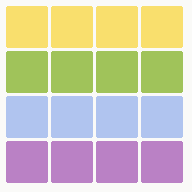
Connections Hints for April 30, 2026
Yellow Connections Hints
Yellow Category Hint
Verbs that all mean to make someone feel unsettled or frightened
Think: Think: sudden fright, rattled nerves
Yellow Category Name
UNNERVE
Yellow Category Words
Reveal word 1
ALARMReveal word 2
DISTURBReveal word 3
SHAKEReveal word 4
SHOCKGreen Connections Hints
Green Category Hint
Actions you perform on a completed item to show it is done
Think: Think: to-do list, pen in hand
Green Category Name
REMOVE, AS AN ITEM FROM A LIST, WITH "OFF"
Green Category Words
Reveal word 1
CHECKReveal word 2
CROSSReveal word 3
MARKReveal word 4
TICKBlue Connections Hints
Blue Category Hint
Words or names where T is a recognised shorthand or abbreviation
Think: Think: physics, logic, dinosaurs
Blue Category Name
WHAT "T" MIGHT STAND FOR
Blue Category Words
Reveal word 1
TESLAReveal word 2
TIMEReveal word 3
TRUEReveal word 4
TYRANNOSAURUSPurple Connections Hints
Purple Category Hint
Words that sound identical to possessive adjectives when spoken aloud
Think: Think: her, our, their, your
Purple Category Name
HOMOPHONES OF POSSESSIVE ADJECTIVES
Purple Category Words
Reveal word 1
HOURReveal word 2
HURReveal word 3
THEREReveal word 4
YORENYT Connections Answers for April 30, 2026
NYT Connections Answers Explained: April 30, 2026
UNNERVE
ALARM, DISTURB, SHAKE, and SHOCK all mean to unnerve someone — to fill them with sudden anxiety, fear, or unease. Each word has other common meanings, but this emotional-disturbance sense is what links them here.
- ALARM
- To alarm someone is to cause them sudden fear or anxiety — 'the news alarmed her' means it unnerved her.
- DISTURB
- To disturb someone is to unsettle or trouble them emotionally — the most direct synonym for unnerve in this group.
- SHAKE
- To shake someone means to disturb or unsettle them deeply — 'it shook me' is a common way of saying something unnerved you.
- SHOCK
- To shock someone is to disturb them with something sudden and unexpected — the shock of bad news is a form of being unnerved.
REMOVE, AS AN ITEM FROM A LIST, WITH 'OFF'
CHECK, CROSS, MARK, and TICK all complete the phrase '_____ off' to mean removing or completing an item on a list — you check off, cross off, mark off, or tick off a task once it is done.
- CHECK
- To check off an item is the standard American English phrase for marking a completed task on a list.
- CROSS
- To cross off means to draw a line through an item to show it is done — common in British English and easily confused with CROSS meaning angry.
- MARK
- To mark off an item means to place a symbol against it indicating completion — a slightly more formal version of the same action.
- TICK
- To tick off is the standard British English phrase for marking a completed item — the tick symbol is the British equivalent of the American checkmark.
WHAT 'T' MIGHT STAND FOR
TESLA, TIME, TRUE, and TYRANNOSAURUS are all words that the letter T commonly abbreviates — T for Tesla (the unit of magnetic flux density), T for time in physics, T for true in logic, and T in T. rex for Tyrannosaurus.
- TESLA
- The tesla is the SI unit of magnetic flux density, named after inventor Nikola Tesla — it is abbreviated as T in scientific notation.
- TIME
- In physics equations and everyday abbreviations like T-minus, T stands for time — one of the most common single-letter scientific abbreviations.
- TRUE
- In logic, Boolean algebra, and on forms and questionnaires, T is the standard abbreviation for True — the opposite of F for False.
- TYRANNOSAURUS
- T. rex is short for Tyrannosaurus rex — the T stands for Tyrannosaurus, making this the most dramatic expansion of a single letter in the puzzle.
HOMOPHONES OF POSSESSIVE ADJECTIVES
HOUR, HUR, THERE, and YORE are all homophones of possessive adjectives — words that sound identical to 'our,' 'her,' 'their,' and 'your' respectively when spoken aloud, even though their spellings and meanings are completely different.
- HOUR
- HOUR (a unit of sixty minutes) is pronounced identically to 'our,' the possessive adjective meaning 'belonging to us.'
- HUR
- HUR is not a standard English word, but spoken aloud it sounds exactly like 'her,' the possessive adjective meaning 'belonging to her' — its only job here is phonetic.
- THERE
- THERE (meaning 'in that place') is pronounced identically to 'their,' the possessive adjective meaning 'belonging to them.'
- YORE
- YORE (an archaic word meaning 'long ago,' as in 'days of yore') is pronounced identically to 'your,' the possessive adjective meaning 'belonging to you.'